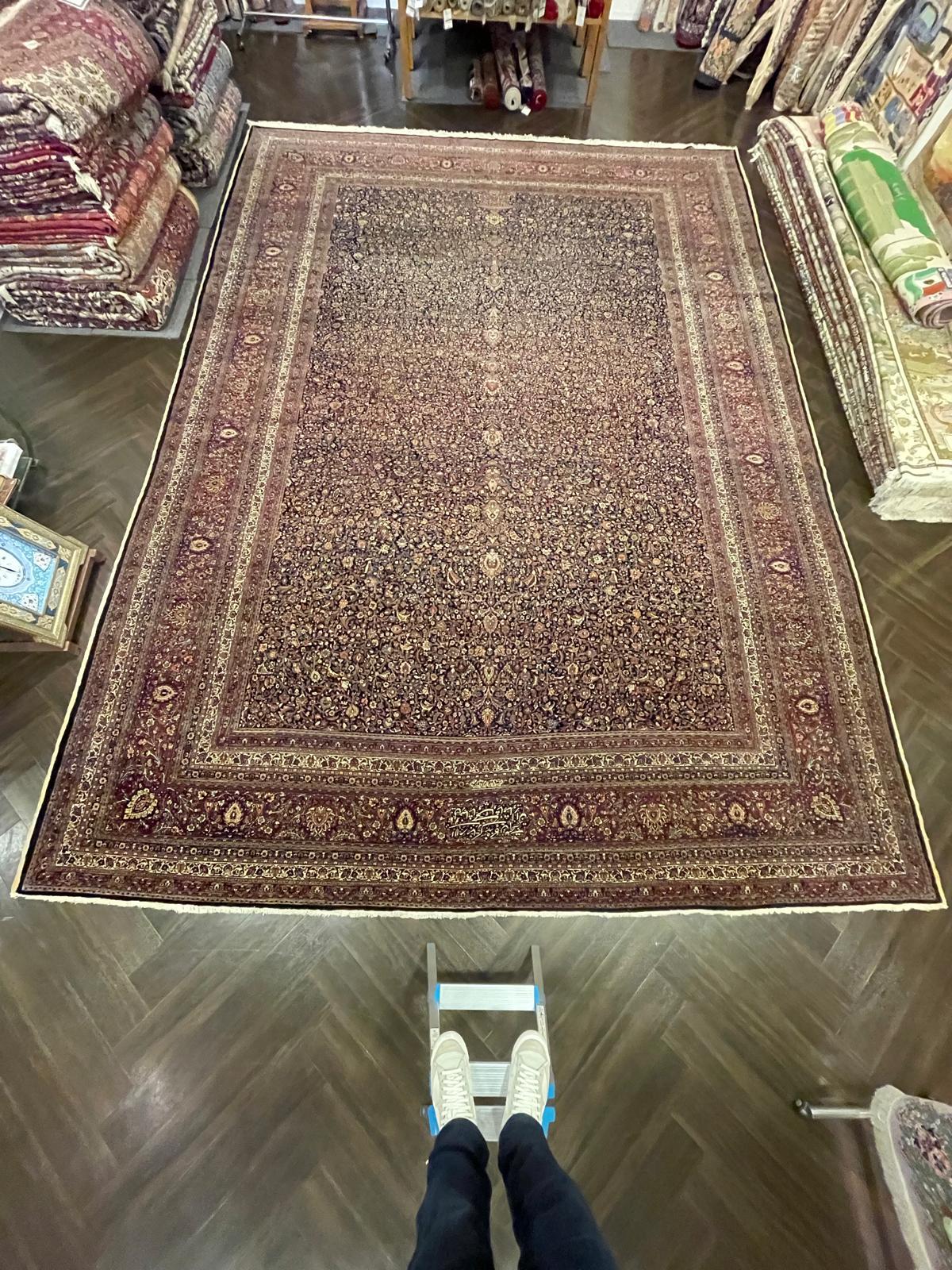
A brilliant manifestation of the art of rug weaving from the early Pahlavi era, this valuable Amooghli carpet was woven by the direct command of Reza Shah — a testament to the golden age of Persian textile artistry.
A Royal Commission
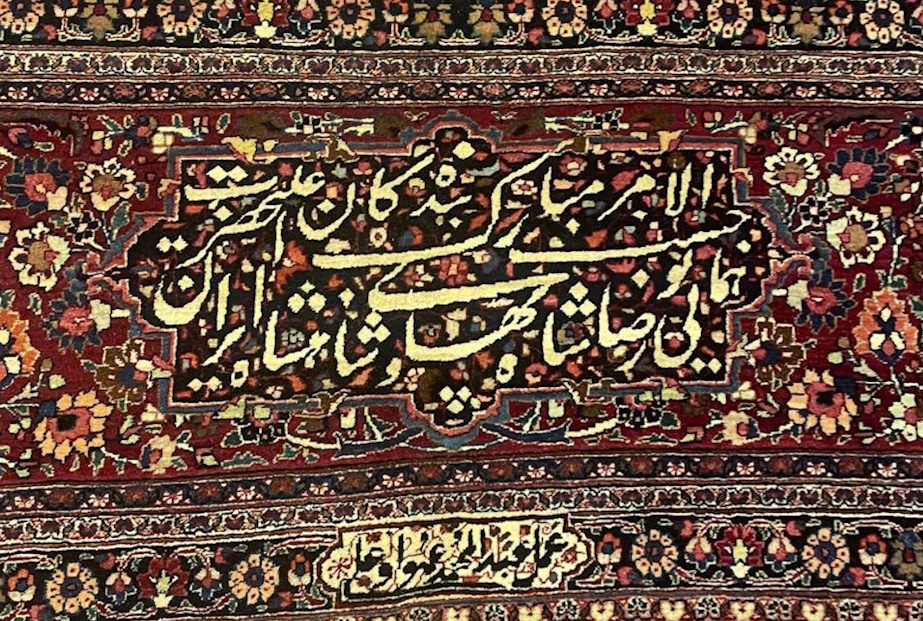
This exquisite piece, with a fine weave of approximately 90 wefts per inch, features a cartouche bearing the name of the master of the workshop, "Abdol Mohammad Amooghli." The Amooghli workshop, renowned across Persia for its uncompromising devotion to perfection, was entrusted with some of the most significant commissions of the era.
Its expansive Afshan pattern and high knot density, combined with an authentic kilim weave and intact original fringes, are among its standout features. The Afshan design — an all-over pattern of intertwining flowers and vines without a central medallion — creates a mesmerizing visual rhythm that draws the eye across the entire field of the rug.
The Woven Signature
Woven directly into the border of the carpet is a cartouche — an ornate panel — bearing Persian calligraphy that identifies the workshop master and the royal patronage under which this piece was created. Such signatures were marks of immense pride and accountability; they declared to all future generations exactly who was responsible for this work of art.
"Having endured the passage of time, this artistic masterpiece remains in exceptional, completely healthy condition — serving as a testament to the unparalleled authenticity and quality of the Amooghli workshop."
Specifications
| Origin | Mashad, Iran — Amooghli Workshop |
| Era | Early Pahlavi Period (circa 1925–1940) |
| Pattern | Afshan (all-over floral, no central medallion) |
| Weave | ~90 wefts per inch, authentic kilim weave |
| Size | 517 cm × 361 cm |
| Condition | Exceptional — original fringes intact |
| Commission | By direct command of Reza Shah |
| Signature | Cartouche: "Abdol Mohammad Amooghli" |
Enduring Legacy
Rugs from the Amooghli workshop are extraordinarily rare on the global market. The combination of royal provenance, documented master signature, exceptional preservation, and monumental scale places this carpet among the most significant antique Persian textiles in private hands today. Pieces of this caliber are not merely decorative — they are historical documents, woven records of an empire's artistic ambition.
To stand before this carpet is to feel the weight of nearly a century of history. Every knot, every thread, every subtle gradation of color speaks to the hands that created it — and to the king who commanded its creation.